
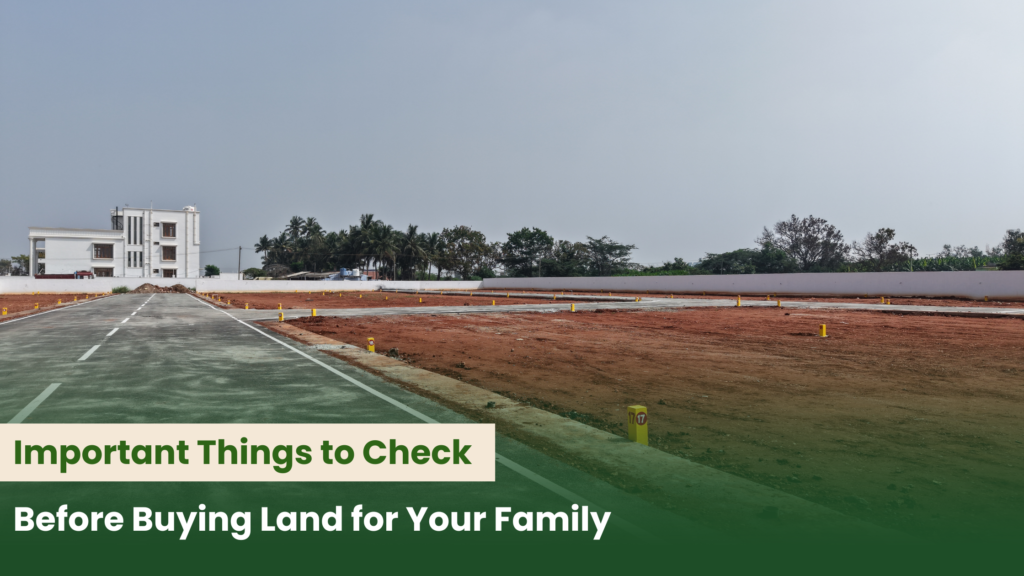
Buying land is a dream for many families. A plot of land gives you the freedom to build a home exactly the way you want, without the limitations that come with apartments or pre built houses. It also offers long term value and the flexibility to plan your future at your own pace. However, buying a plot for building a houseland is not as simple as selecting a location and completing the payment.
Families must carefully evaluate several aspects before making a decision. From legal verification to location advantages, every factor plays a role in ensuring that your investment is safe and beneficial. Here are the most important things to check before buying a plot so that your family can make a smart and secure decision.
-
Verify The Legal Documents
One of the most important factors to consider when buying land is verifying the legal status of the property. Before purchasing, make sure the land has clear ownership and proper legal documentation. The seller should have valid proof showing that they legally own the property and have the right to sell it.
Families should check whether the land has a clear title and whether there are any legal disputes attached to it. Reviewing previous ownership records can also help confirm that the property has been transferred legally over time. Legal verification protects you from future conflicts and ensures that your investment is safe.
-
Check Land Use And Zoning Regulations
Another important step in what to check before buying land is confirming whether the land is approved for residential use. Some lands are classified for agricultural or commercial purposes. If you are planning to build a house, the land must be approved for residential development. Local authorities often regulate how land can be used in a particular area.
Families should ensure that the plot complies with zoning regulations and is suitable for constructing a home. Ignoring this step could lead to complications when applying for building approvals later.
-
Evaluate The Location
Location plays a major role when choosing a residential plot. The right location can make daily life more convenient and also improve the long term value of your investment. When evaluating location, families should consider:
- Proximity to schools and colleges.
- Access to hospitals and healthcare facilities.
- Availability of supermarkets and essential stores.
- Connectivity to major roads and transportation.
Choosing a well connected area not only improves lifestyle convenience but also increases property value in the future. This is one of the most important aspects of how to choose a residential plot wisely.
-
Check Infrastructure And Basic Facilities
Before finalizing a plot, families should check whether the area has essential infrastructure. Important facilities to evaluate include:
- Proper road access
- Electricity connection
- Water supply
- Drainage systems
- Street lighting
If these facilities are not available, it may become difficult to build or live in the area immediately. Basic infrastructure also affects property appreciation. Plots located in well developed areas usually grow in value faster than those in undeveloped locations.
-
Understand The Plot Size And Shape
Plot dimensions can significantly influence how you design and construct your home. Families should carefully review the layout and measurements of the land. Irregularly shaped plots may limit building designs, while well proportioned plots allow more flexibility.
The plot should also provide enough space for parking, open areas, or future extensions. This is another key factor to consider when buying land, especially if you plan to build a long term family home.
-
Check Soil Quality And Land Condition
Many families overlook soil quality when buying land, but it plays an important role in construction. The soil should be strong enough to support the foundation of a house. Poor soil conditions may increase construction costs because additional reinforcement may be required.
Families should also check whether the land is prone to waterlogging or flooding during heavy rains. Evaluating land condition ensures that the plot is suitable for building a safe and durable home.
-
Review Access And Road Connectivity
Accessibility is another important aspect of things to check before buying a plot. The plot should have proper road access. Land that does not have legal road connectivity can create problems when transporting construction materials or commuting daily. Families should confirm whether the road leading to the property is publicly accessible and legally approved.
Good road connectivity improves convenience and adds value to the property. If you are in search of plots that have perfect accessibility, then going for Aara Spaces’ Aara Enclave, situated in Kalapatti will be the smartest choice.
-
Check Nearby Development And Future Growth
Understanding the future development plans of an area can help families make a smarter investment. If new schools, hospitals, roads, or commercial areas are planned nearby, the value of the land is likely to increase over time. On the other hand, if the surrounding area lacks development potential, the land may take longer to appreciate. Researching upcoming infrastructure projects can help families identify areas with strong growth potential.
-
Evaluate The Budget And Additional Costs
Many buyers focus only on the price of the plot and forget about additional expenses. When buying land, families should consider costs such as:
- Registration charges
- Legal verification fees
- Property taxes
- Land development costs
Planning the budget carefully helps avoid financial stress later. This step is essential when considering buying a plot for building a house because construction costs will also follow.
-
Choose A Trusted Seller Or Developer
Finally, families should always purchase land from a reliable seller or developer. A trusted seller ensures transparency in documentation and provides accurate information about the property. Buying land from well known developers or verified sellers reduces the risk of legal issues and delays. Reputation, credibility, and past projects can help families determine whether a seller is trustworthy.
Final Thoughts
Buying land is an important milestone for any family. It is not just about owning property but about creating a space where memories will be built for generations. However, making the right decision requires careful planning and research. By understanding the things to check before buying a plot, families can avoid risks and ensure their investment is secure.
From verifying legal documents to evaluating location, infrastructure, and future development, every step matters. Considering these factors to consider when buying land will help families choose the right property and move confidently toward building their dream home.
Taking the time to evaluate what to check before buying land can make the entire process smoother and more rewarding. With the right approach, families can successfully find the perfect residential plot and begin planning the home they have always wanted.
